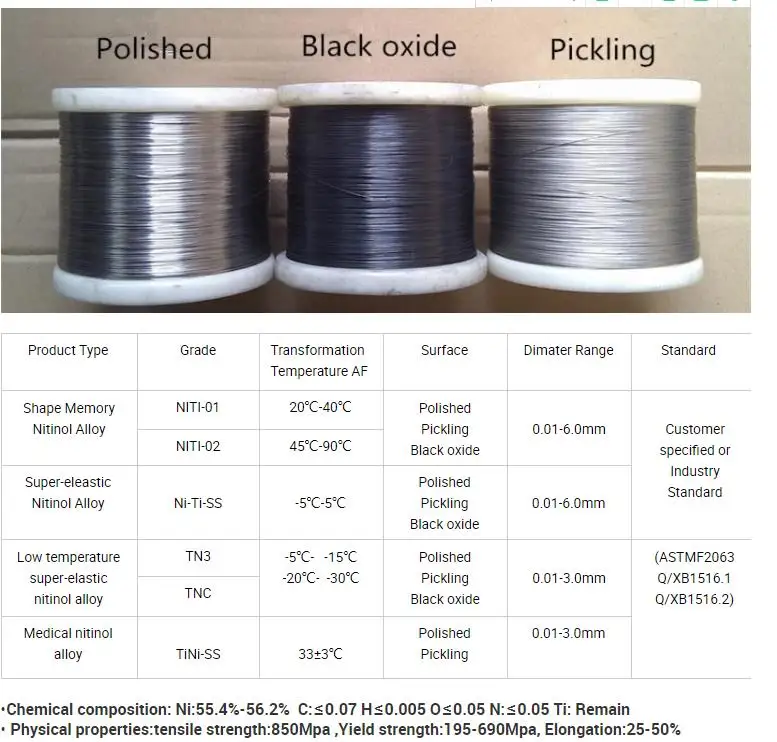
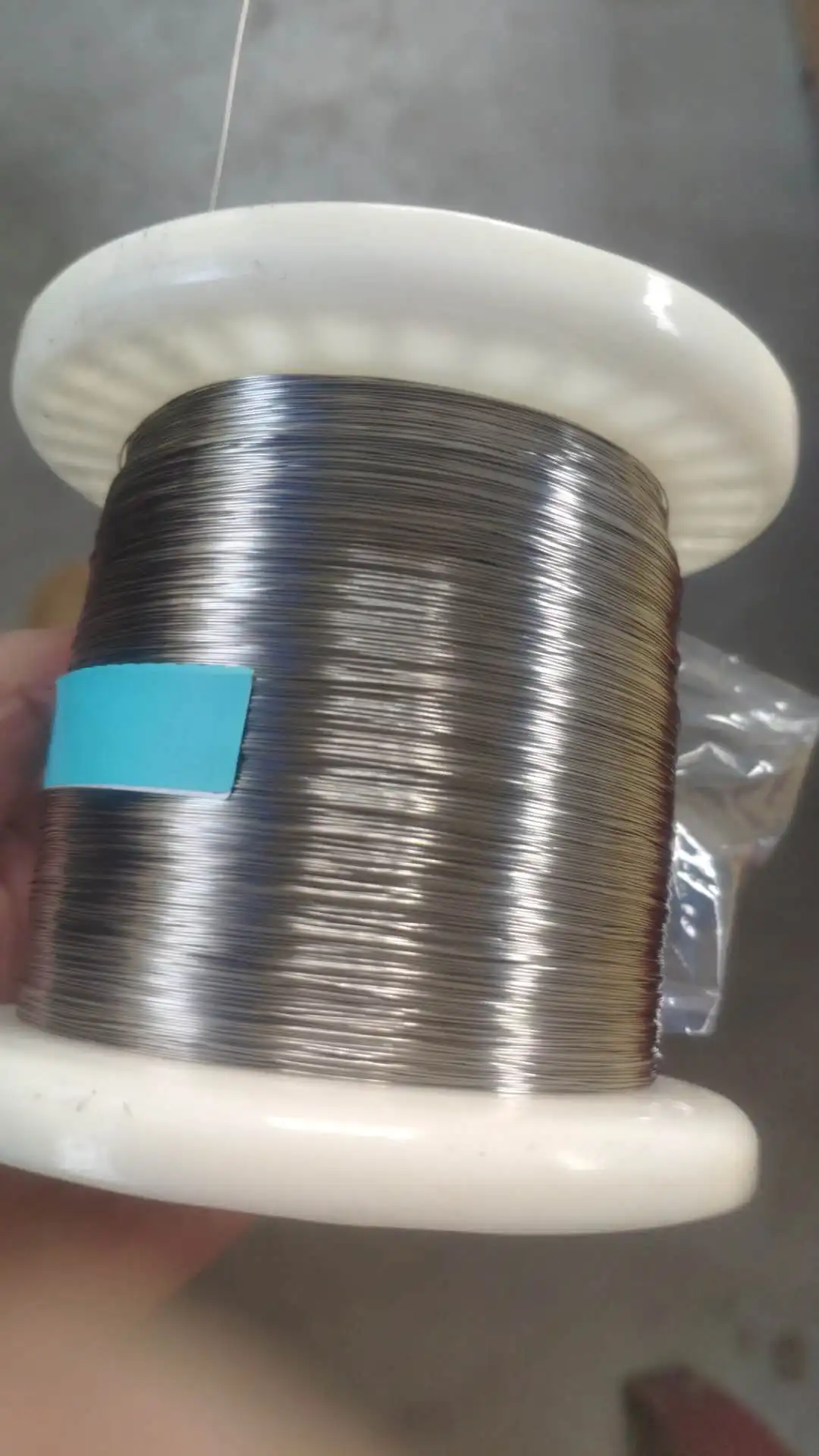
Nitinol wire
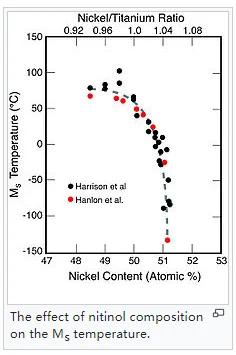
Nitinol is typically composed of approximately 50 to 51% nickel by atomic percent (55 to 56% weight percent). Making small changes in the composition can change the transition temperature of the alloy significantly. Transformation temperatures in nitinol can be controlled to some extent, where Af temperature ranges from about −20 °C to +110 °C. Thus, it is common practice to refer to a nitinol formulation as "superelastic" or "austenitic" if Af is lower than a reference temperature, while as "shape memory" or "martensitic" if higher. The reference temperature is usually defined as the room temperature or the human body temperature (37 °C; 98 °F).
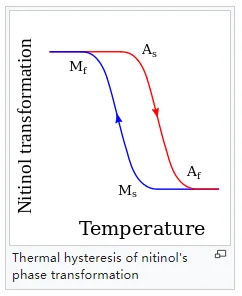
The scenario described above (cooling austenite to form martensite, deforming the martensite, then heating to revert to austenite, thus returning the original, undeformed shape) is known as the thermal shape memory effect. To fix the original "parent shape," the alloy must be held in position and heated to about 500 °C (932 °F). This process is usually called shape setting. A second effect, called superelasticity or pseudoelasticity, is also observed in nitinol. This effect is the direct result of the fact that martensite can be formed by applying a stress as well as by cooling. Thus in a certain temperature range, one can apply a stress to austenite, causing martensite to form while at the same time changing shape. In this case, as soon as the stress is removed, the nitinol will spontaneously return to its original shape. In this mode of use, nitinol behaves like a super spring, possessing an elastic range 10–30 times greater than that of a normal spring material. There are, however, constraints: the effect is only observed about 273-313 K (0-40 °C; 32-104 °F) above the Af temperature. This upper limit is referred to as Md, which corresponds to the highest temperature in which it is still possible to stress-induce the formation of martensite. Below Md, martensite formation under load allows superelasticity due to twinning. Above Md, since martensite is no longer formed, the only response to stress is slip of the austenitic microstructure, and thus permanent deformation.
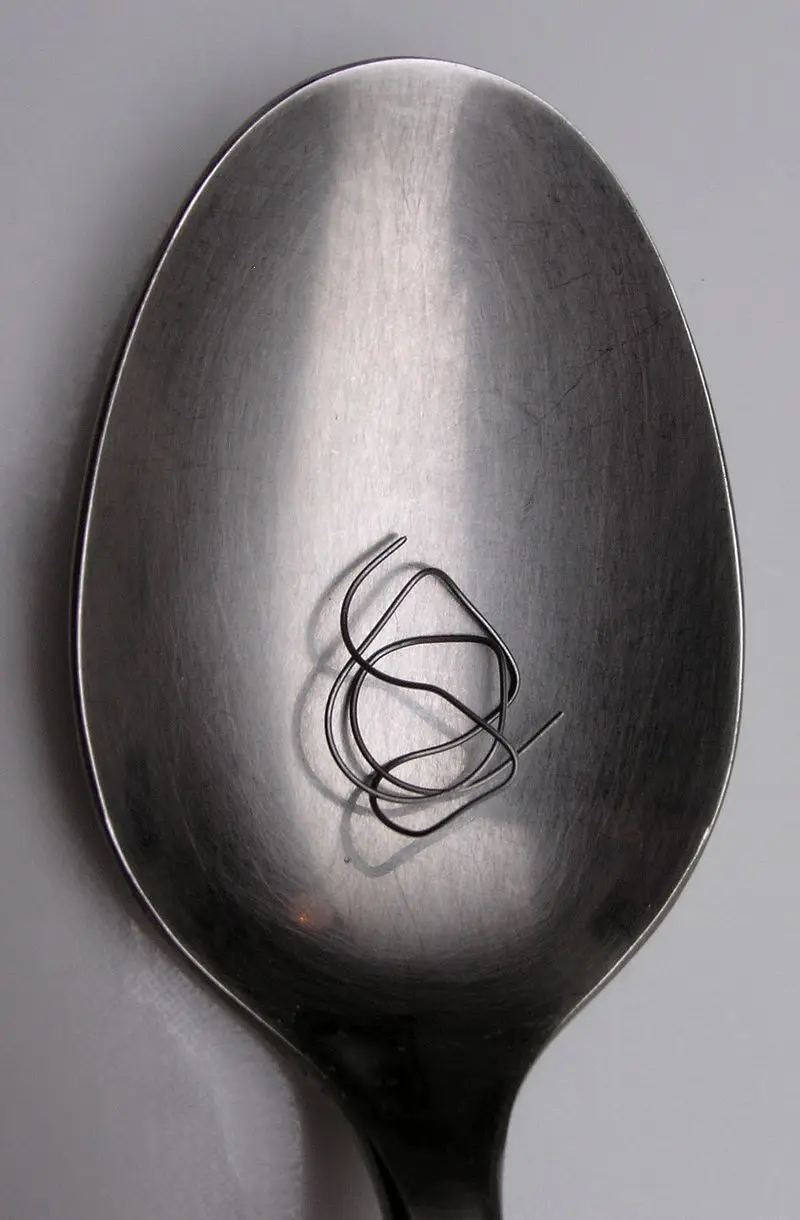
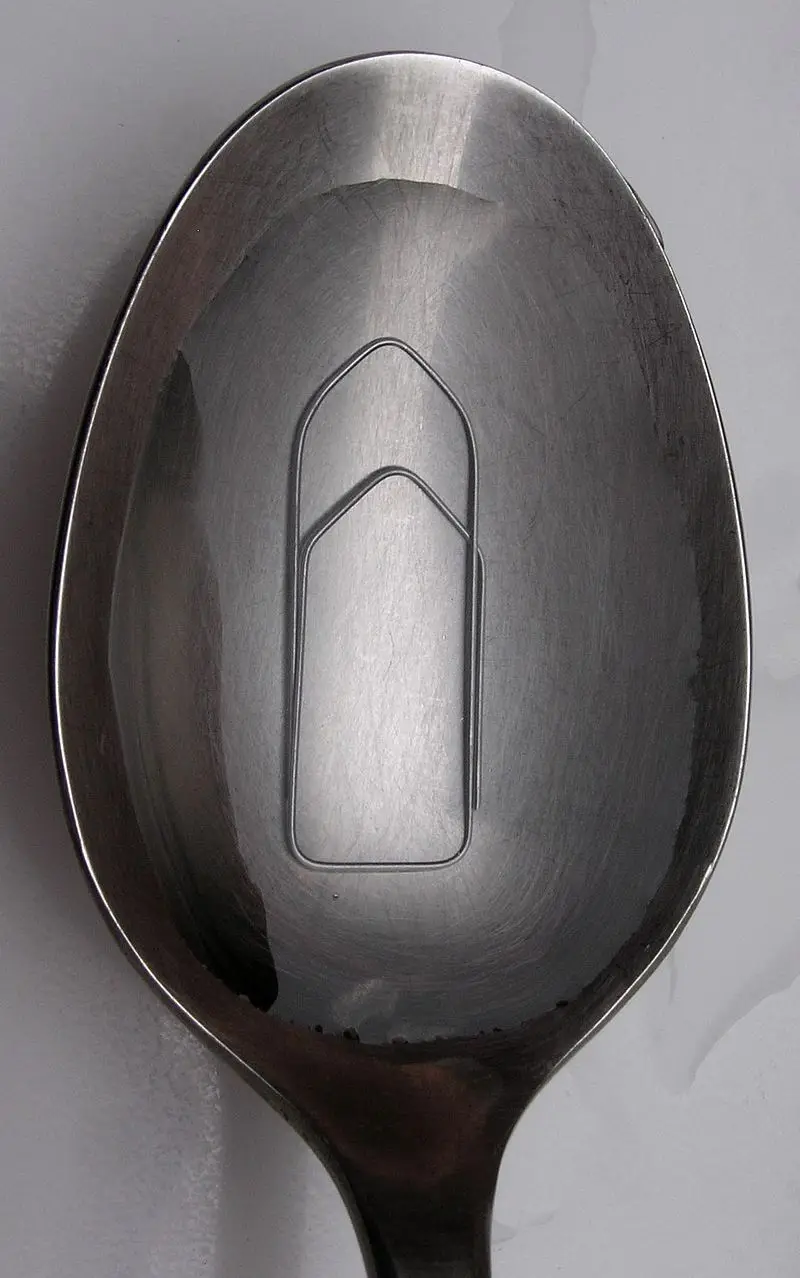
A nitinol paperclip bent and recovered after being placed in hot water.
Nitinol is deformed at a low temperature, and heated to recover its original shape through the Shape Memory effect.
Detailed image
Bright polished surface
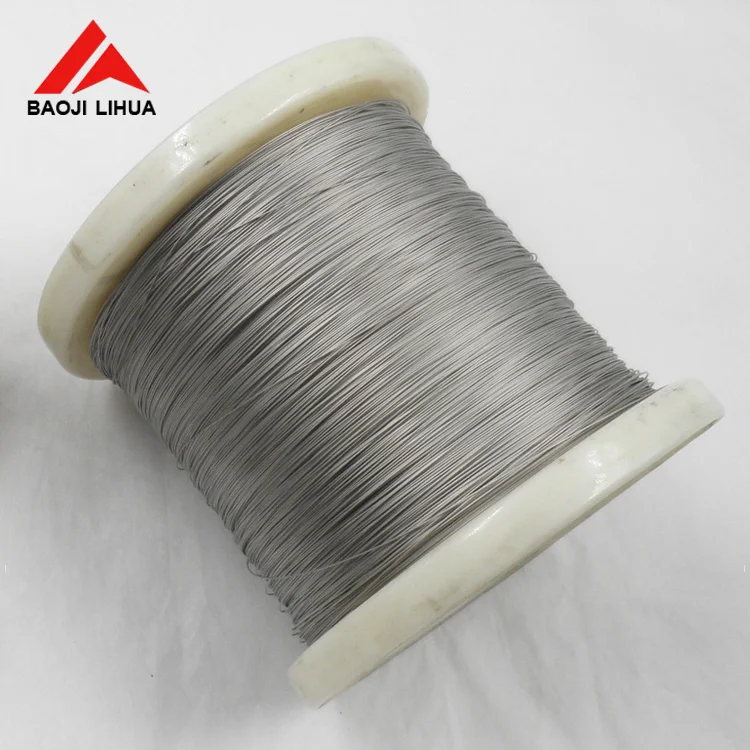
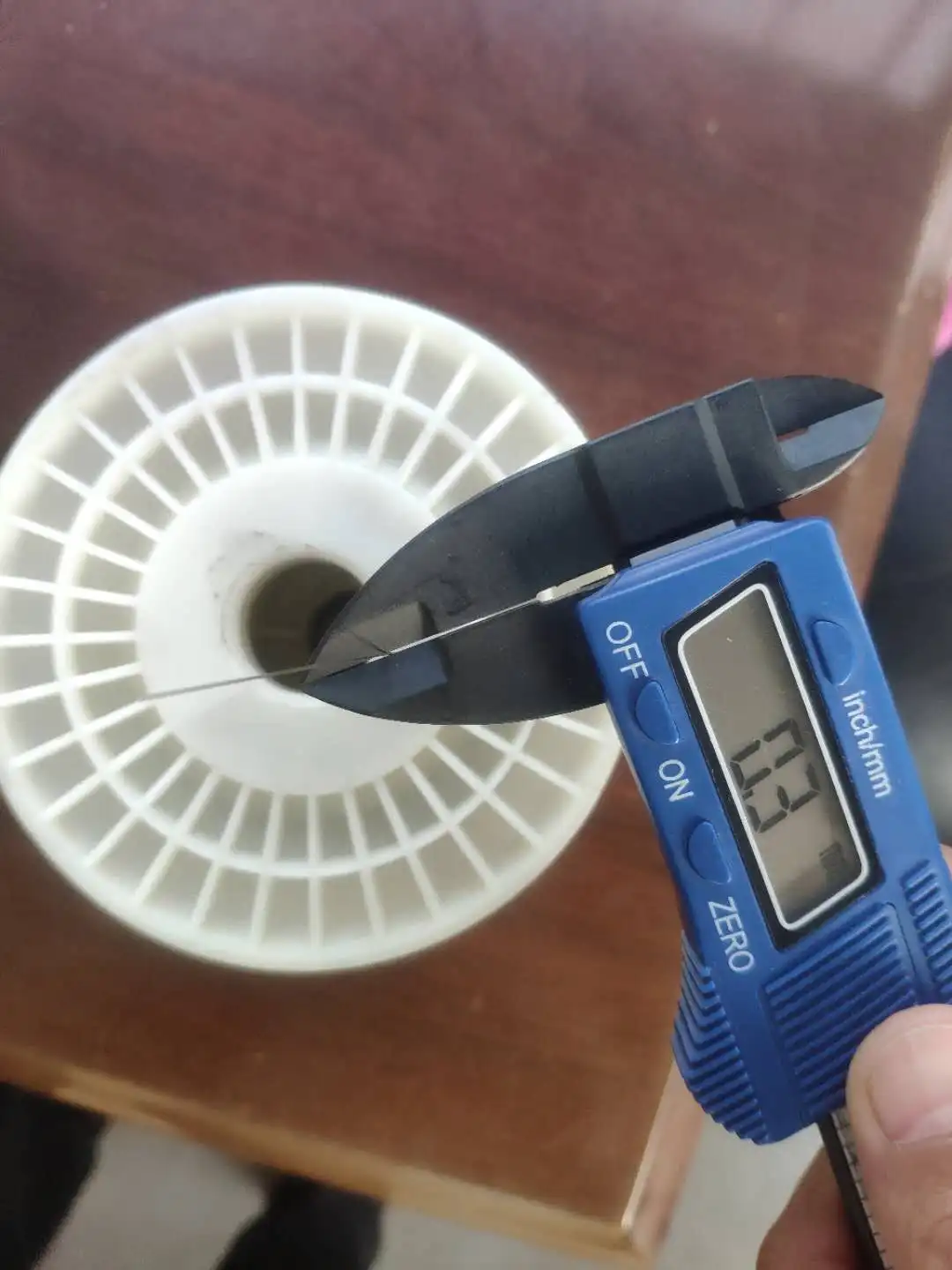
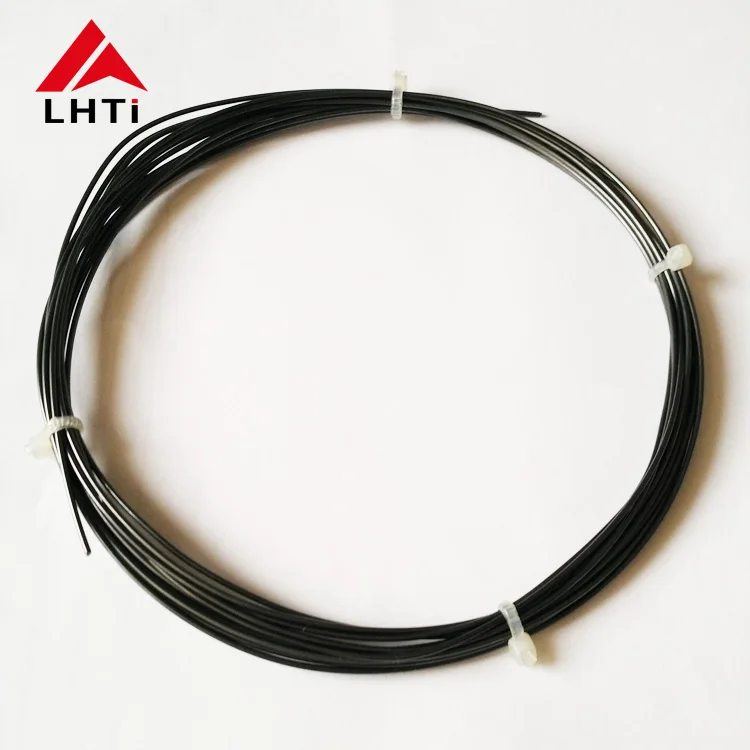
Black surface
FAQ
FAQ |
Q1.--How can you ensure the product quality? --All products are manufactured according to ASTM standard (Bolts are according to ASME standard and DIN standard). --We make 100% inspection before shipment. -- Company certificate:ISO 9001:2008 ;products certificate:EN10204/3.1 |
Q2.--Can you print our LOGO on the products? --Sure, and we welcome the customerized products. |
Q3.--Can we get the free sample? --Sure. |
Q4.--What about the payment terms? --T/T, L/C,Paypal,Western Union,Escrew and MoneyGram etc are all accepted. |
Q5.--Do you have your website? --Yes, Please click here. http://www.lihua-group.com (Independent website) |
Q6.--What is the necessary information for a inquiry? --Product name, specification, material grade and quantity. |